
TEHRAN – Mr. Bayazid Bastami and Mr. Alameh Tabatabai. Two prominent figures of Iranian mysticism and philosophy are listed in UNESCO’s commemorative program for 2026-2027.
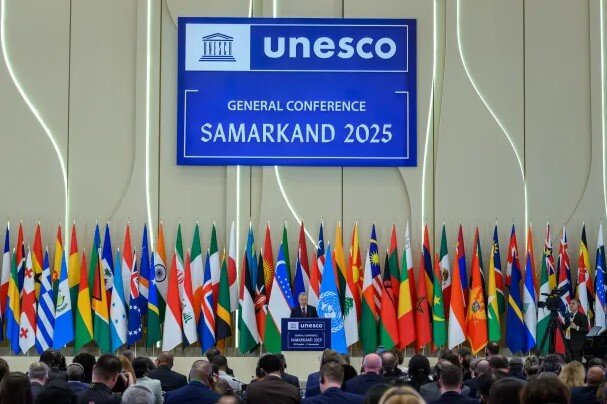
The decision was taken on Saturday at the 43rd General Assembly of the United Nations Educational, Scientific and Cultural Organization (UNESCO) in Samarkand, Uzbekistan.
These potential programs focus on anniversaries of important historical figures and cultural landmarks.
Prominent Iranian figures Bayazid Bastami and Allameh Tabatabai were included in UNESCO’s commemorative list for the 2026-2027 cycle following the proposal of the Iranian National Committee and subsequent approval by the General Assembly.
It is expected that cultural and scientific events will be organized at national and international levels to coincide with the promotion and celebration of these immortal figures.
Based on a UNESCO resolution, the 1,150th anniversary of the death of Bayazid Bastami, a recognized teacher of Islamic mysticism, will be commemorated with the support of Armenia, Tajikistan and Turkey.
Additionally, the 100th anniversary of the life of Arameh Tabatabai, which focuses on his timeless work “Principles of Philosophy and Methodology of Realism”, was approved with the support of Azerbaijan, Iraq and Pakistan.
In addition, Hossein Simai-Sallaf, Minister of Science, Research and Technology of Iran and Chairman of the Iranian National Commission for UNESCO, and Hassan Fartusi, Secretary General of the Iranian National Commission for UNESCO, are representing the country at this session of the UNESCO General Assembly, which will be held on November 13.
The main agenda of this session will feature the formal appointment of UNESCO’s next Director-General and the adoption of the first global recommendation on the ethics of neurotechnology.
This will be the first time in 40 years that the UNESCO General Assembly will be held outside its Paris headquarters.
Uzbekistan is currently implementing a five-year cooperation program with UNESCO until 2027. The historic city of Samarkand, located in southeastern Uzbekistan, is a UNESCO World Heritage Site known as the cultural crossroads of the ancient Silk Road.
Bayazid Bastami (d. 874 AD) was a famous Sufi from north-central Iran. Known for his bold expressions of mystical absorption in Allah, he emphasized self-annihilation in divine union. Bastami is known for his ecstatic statements, claiming a mystical union in which the Word of God flows through him, and has been labeled a “drunken” Sufi. Through his grandfather, Bastami was of Persian Zoroastrian descent and lived a life of asceticism and devotion. Although he left behind no written works, his influence on the emphasis on divine love and spiritual ecstasy remains, especially in the Naqshbandi Sufi order.
Muhammad Hossein Tabatabai (1903-1981), a prominent Iranian scholar and philosopher, is known for his comprehensive exegesis of the Qur’an, Tafseer Al-Mizan, and his contributions to Shi’ite thought. He was born near Tabriz, studied religious studies in Najaf, and then taught in Qom.
His works encompass philosophy, theology, and mysticism, with an emphasis on interpreting the Qur’an through the Qur’an. Known as Arameh Tabatabai, he also engaged in poetry and intellectual dialogue with Western scholars such as Henry Corbyn. His legacy continues through his influential writings and teachings.
SAB/