
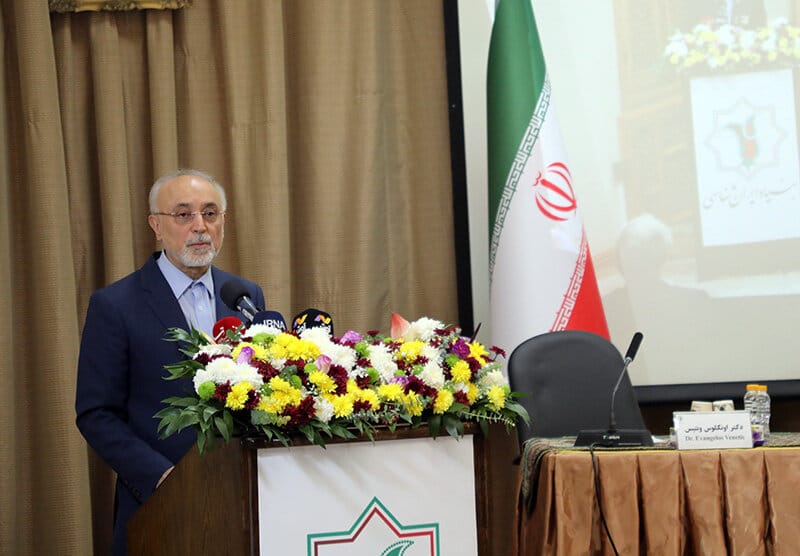
TEHRAN – The first international conference on Iranian studies was held in Tehran on Saturday, marking an important milestone in promoting Iranian cultural and academic dialogue around the world.
The event, organized by the Iranian Studies Foundation in partnership with prominent institutions and research centers, brought together more than 50 scholars and Iranian scholars from 21 countries. The event, titled “International Conference on Iranian Studies: Contemporary Iranian Studies, Cultural Diplomacy, and International Exchange,” focused on contemporary Iran, cultural diplomacy, and the role of narrative in shaping Iran’s image on the world stage.
The event, held at the Iranian Studies Foundation’s conference hall, was hailed as one of the most comprehensive gatherings in Iranian studies and cultural diplomacy in recent years.
Experts stressed that the diverse participation underscores Iran’s strategic focus on promoting international understanding through academic exchanges and cultural cooperation. The Foundation’s extensive library and archives house more than 100,000 books and numerous manuscripts, testifying to Iran’s rich intellectual heritage and commitment to research.
The main themes of the conference centered on two panels: “Iran in a Globalized World” and “Iranology, Cultural Diplomacy, and International Relations.”
Ali Akbar Salehi, President of the Iranian Studies Foundation, spoke at the event, noting that the Foundation’s architecture, which combines traditional Persian design with modern elements, is a symbol of Iran’s cultural resilience, and emphasized the importance of dialogue and mutual respect in academic activities.
Following Salehi’s remarks, Mohammad Javad Zarif, former Iranian foreign minister and Tehran University faculty member, paid tribute to the foundation’s late founder Hassan Habibi and reflected on Iran’s role in the modern world. Foreign Minister Zarif said, “Iran’s international image is rooted in its culture and soft power.”
He stressed that Iran has never sought global domination through military force and has historically relied on language, culture and art to build influence.
Foreign Minister Zarif emphasized the importance of Iranian scholars in countering misinformation and promoting a true understanding of Iran’s identity and contributions around the world.
The first panel, “Iran in a Globalized World,” addressed how Iran can overcome the challenges and opportunities of increasing interconnectedness. Mehdi Ahoy, deputy director of research at the Iranian Studies Foundation, explained that Iran’s cultural influence extends beyond its borders through architecture, literature, and art.
Ahoi highlighted core elements such as monotheism, Persian political ideology that emphasizes justice, the Persian language, and mysticism, which have collectively contributed to Iran’s enduring cultural influence and ability to engage in meaningful dialogue with neighboring civilizations.
This was followed by scholars from Uzbekistan, Russia, Georgia, Greece, and South Asia presenting their views on Iran’s historical and ongoing influence.
The second panel, “Iranology, Cultural Diplomacy, and International Relations,” featured scholars from Iraq, Indonesia, Turkey, China, and India.
Majid Anwar Abbas of Iraq emphasized the importance of linguistic coexistence between Persian and Arabic in promoting dialogue of civilizations. Afifa Ahmad from Indonesia spoke about how Persian poetry, especially Rumi, continues to promote cross-cultural understanding. Turkish scholar Ali Temizer traced 2,000 years of Iranian-Turkish relations and emphasized their common cultural heritage. Additionally, Chinese and Indian scholars emphasized Iran’s influence on their countries’ rich historical and cultural traditions.
Concluding the conference, participants agreed on the important role of Iranian studies in strengthening cultural diplomacy and international cooperation. Promoting Persian language education, organizing cultural exchange programs and expanding academic cooperation were identified as important strategies.
Photo: Ali Akbar Salehi, Chairman of the Iranian Studies Foundation, giving a lecture at the 1st International Conference on Iranian Studies, “Modern Iranian Studies, Cultural Diplomacy, and International Exchange,” held in Tehran on November 15, 2025.
SAB/