
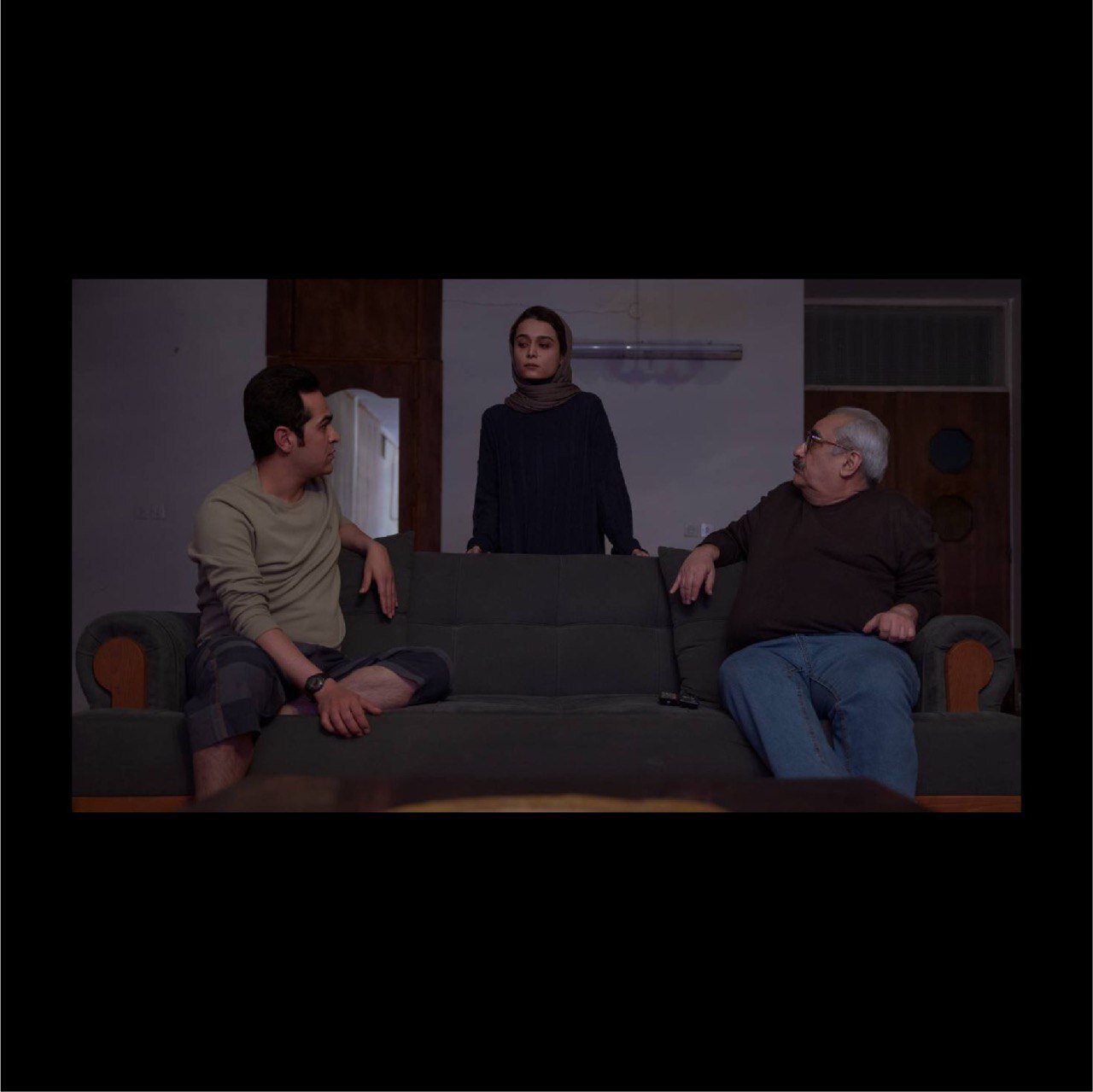
TEHRAN – The Iranian film “Memories of a Rope Walker” directed by Hamed Rajavi won an award at the 5th Rojava International Film Festival, held from November 13 to 20 in Qamishlo, Syria.
Rajavi’s second feature film won the Seri Sreya Award in the Democracy and Human Rights category at the festival, IRNA reported.
“Memories of a Rope Walker” is a story about a young man and his father who live happily together in the same apartment. Despite his son’s objections, the father invites the call girl to his home. One day, he brings home a woman who won’t leave the house. Father and son work together to convince her to leave home. But when she finally departs of her own volition, her absence becomes unbearable for both men.
Incorporating profoundly different considerations of the ropewalkers and Übermensch from Nietzsche’s Thus Spoke Zarathustra, Memory of the Ropewalkers anticipates how a women’s uprising could teach a nation to fight for its rights. In this way, the film takes place in a less intimate world, distancing itself from traditional dramatic resolutions and turning it into an allegory of a patriarchal world in which some women try to teach other women to struggle for freedom.
The film has so far been screened at Pune IFF 2024, Dhaka IFF 2024, Latur IFF 2024, Iran Festival Cinema(s) 2024, Barcelona Asian Film Festival 2024 and Wales IFF 2024.
Hamed Rajavi is an Iranian screenwriter and director. He holds a master’s degree in film from the University of Tehran. In addition to writing the screenplays for Rainy Seasons and Parviz, he has also directed eight short films. A Minor Leapdown was his first experience making a feature film, and won the International Critics Federation Award in the Panorama category at the 65th Berlin International Film Festival. Memories of a Rope Walker is his second experience making a feature film.
The 5th Rojava International Film Festival, organized under the theme “Shared Stories and Free Cinema,” went beyond a mere artistic gathering to bring audiences an understanding of the region’s collective memory, culture of resistance, and free cinema.
A total of 81 films were screened at the festival, including 21 documentaries, 7 Kurdish feature films, 8 Syrian films, 8 international feature films, and 37 short films. Of the films screened, 22 were directed by women. This year’s selections highlighted themes such as resistance, the pursuit of freedom, immigration, and social struggle.
Female directors and female-centered film language defined the spirit of this year’s festival. According to the festival committee, women play an active role in every step of the process, and the festival’s films also embrace this perspective, emphasizing that the Rojava revolution itself is a women’s revolution.
SS/SAB