
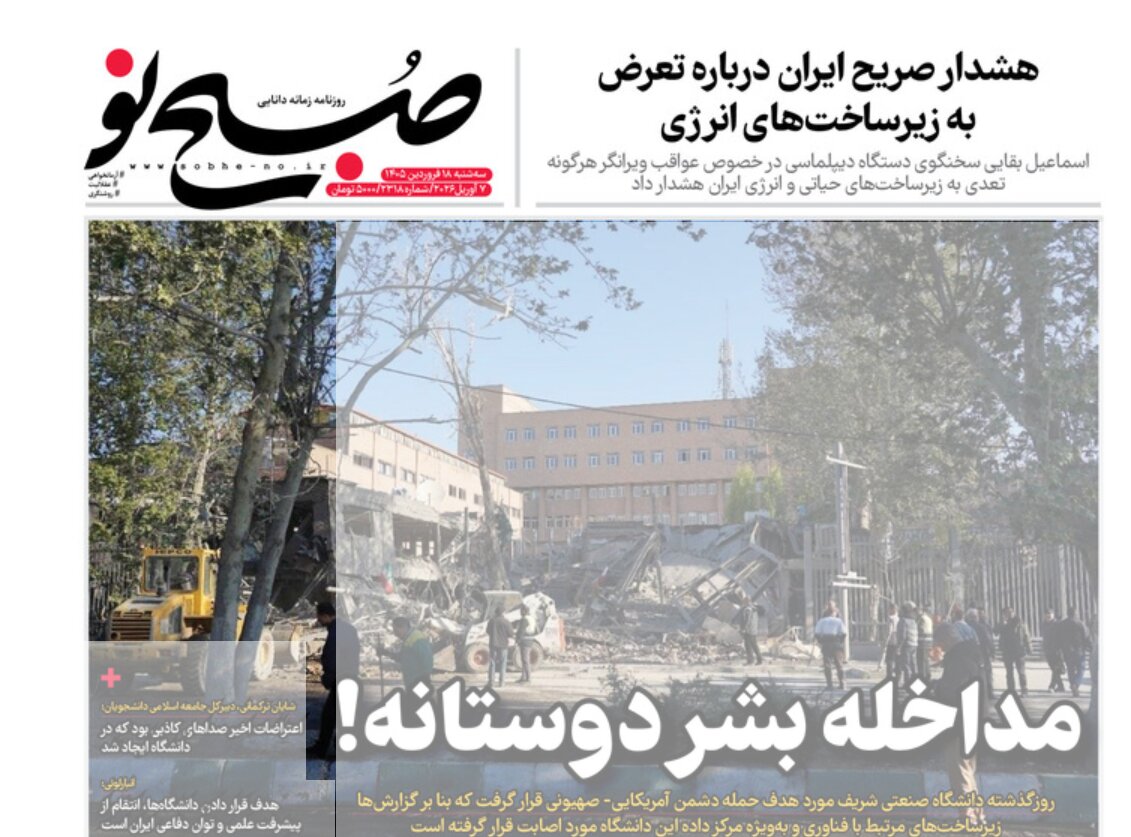
Sob-e-No discussed the strategic aspects of the US-Iranian conflict in an interview with Abolfazl Zohrewand, member of the National Security and Foreign Policy Committee of the National Assembly. From a strategic point of view, Zolevand said, these developments showed that the Americans lacked a precise military strategy.
They misjudged the battlefield with Iran and, as even some American media have admitted, treated it as a simple and trivial scenario. In reality, it did not have even the slightest accurate assessment of the other side’s capabilities or situation, and lacked a clear strategy for confronting Iran. Currently, the United States is effectively trapped in the Strait of Hormuz and the quagmire of regional affairs. There is no escape route or clear outlook to get out of this predicament. In other words, the continuation of this trend should be considered a defeat for the United States, and the only way out of this situation is for the United States to admit its mistake, apologize unconditionally, accept responsibility for the attack on Iran, and pay reparations.
Iran: The road to Japan’s black gold exports is further opened
In an analysis, Iranian newspapers highlighted India’s oil purchases from Iran and wrote, “After years of unprecedented restrictions and pressure on Iranian energy exports by the United States, important developments are now taking shape.” India, one of the world’s largest energy consumers, has purchased its first oil and petroleum products from Iran in nearly seven years. This development is more than just an oil transaction. It could signal the beginning of a new trend, Iran’s gradual return to the formal sphere of energy trade, and a serious violation of the sanctions structure. At a macro level, such a scenario can be interpreted as a strategic retreat from the United States’ maximum pressure policy. The goal was not only to reduce Iranian oil sales, but also to completely cut off Iran’s access to the revenues derived from them. According to the analysis of international experts, this development could significantly increase Iran’s oil revenues in the future.
Khorasan: Trump, Israel and the monarchists have been defeated
Khorasan reflected on the issue of Iran and today’s conflict, quoting political activist Sadegh Jibakaram. The first surprise, according to Jivakaram, was that no Iranian citizen – contrary to the expectations of the performers – took to the streets in a way that could be interpreted as a blow to the regime. The second thing that shocked the United States was Iran’s military resilience over the past six weeks. The third problem, contrary to the assumptions of Tel Aviv and Washington, is that they did not expect Iran to close the Strait of Hormuz. The United States and Europe believed that Iran would not attack regional countries, but in reality this was not the case, but these four points caused global surprise and consternation.
Donya-e-Ektesad: Buying time with a peace deal?
While President Trump and Prime Minister Netanyahu’s threats against Iran continue and have reached unprecedented levels, diplomatic efforts to create a moratorium that leads to an agreement between the parties appear to be taking a new shape, with proposals for de-escalation also being put forward. However, existing evidence indicates that the terms of this agreement resemble a strategy of regrouping rather than a permanent solution to the current conflict. Analysts believe the two-phase proposal by the United States and Europe for a 45-day ceasefire, brokered by Pakistan, is more of a crisis management and time-buying tactic by the West aimed at taking control of the Strait of Hormuz, Iran’s main deterrent, out of the equation. The Iranian government has rejected any temporary cease-fire, seeing it as essentially a license to wage war again against Iran.
Hamshahari: Iran’s strategic military strike against the US and Israel
Mr. Hamshahari reviewed the many accomplishments and successes that increased the wave of acceptance of American defeat. Although the Washington-Tel Aviv Axis seeks to present itself as the victor in the conflict with Iran through rhetoric and media manipulation, many Western and international experts acknowledge that today the Islamic Republic is imposing its strategy on the opposition, putting Trump and Netanyahu in a difficult position and forcing them to look for a way out of the status quo. Iran’s economic opportunities, strategic military aggression, strengthening of national unity, and regional awakening, including calls for US withdrawal and expulsion, are among the world-recognized outcomes of this conflict.