
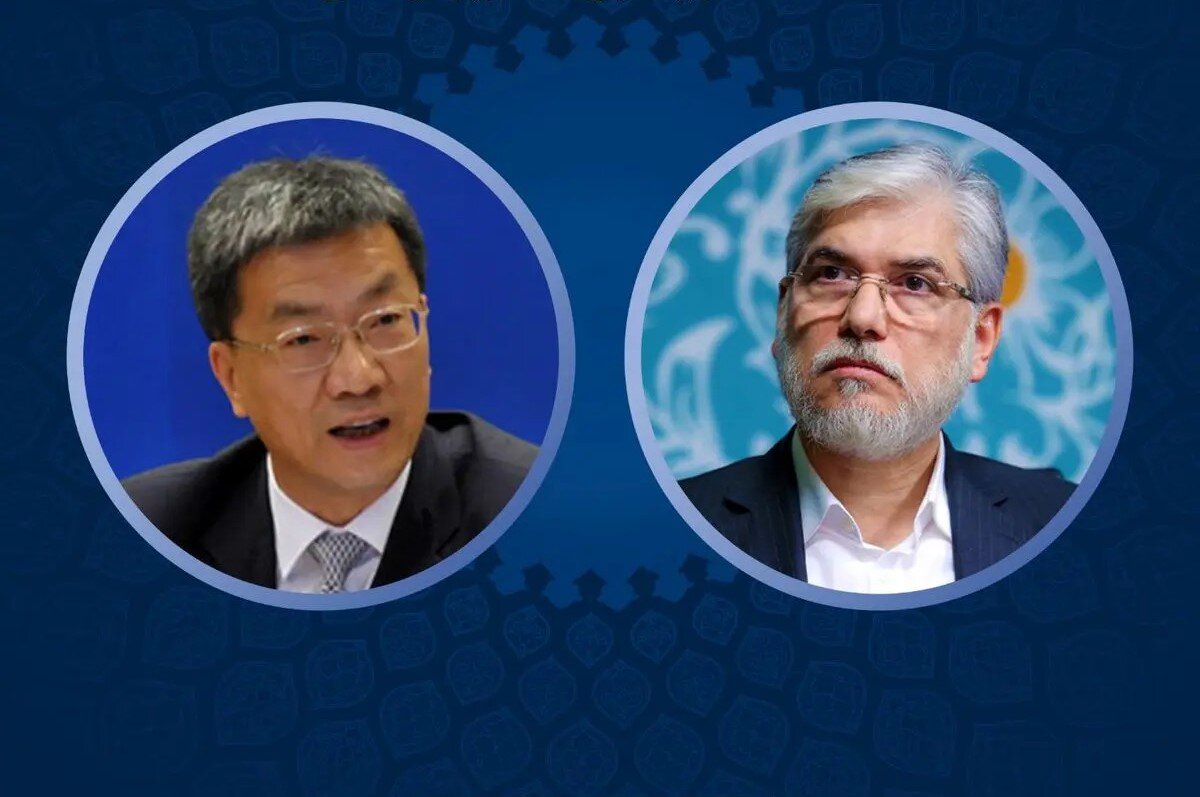
TEHRAN – Chinese Education Minister Huai Jinpeng condemned the US and Israeli attacks on civilians and civilian facilities across Iran, especially universities and educational centers.
China condemns all indiscriminate attacks on civilians and civilian facilities. The Chinese minister said in a letter to Iran’s Science Minister Hossein Simai Salaf that attacking schools and universities and harming children is a clear violation of international humanitarian law and crosses the line of human moral conscience, according to Irnar news agency.
“We deeply regret the attack on Shajare Tayebeh School in Hormozgan province, other educational centers and universities, and the killing and injury of many people in Iran, and on behalf of myself and the Chinese Ministry of Education, we express our deepest condolences and extend our heartfelt condolences to the families of the deceased students.”
The Chinese Ministry of Education attaches great importance to scientific exchanges with Iran. In recent years, inter-university cooperative relationships have been established between many universities on both sides, and cooperation in education and research is steadily progressing.
At the same time, we are mindful and concerned about the situation of Iranian students studying in China, and based on humanitarian principles, we have provided the necessary support to help Iranian students successfully complete their studies in China.”
On March 7, Education Minister Alireza Kazemi wrote a separate letter to Salim bin Mohammed Al Malik, Secretary General of the Islamic World Educational, Scientific and Cultural Organization (ISESCO) Khalid El Enany. Director-General of the United Nations Educational, Scientific and Cultural Organization (UNESCO). Catherine Russell, executive director of the United Nations Children’s Fund (UNICEF), called for condemnation of US and Israeli attacks on educational and cultural organizations in the country.
“As the Minister of Education of the Islamic Republic of Iran, I would like to express my deep regret and strong condemnation of the crimes committed by the United States and the Israeli regime.
These acts, characterized by illegal invasions and deliberate bombing of residential areas, medical facilities, critical educational infrastructure, and especially schools, constitute a serious attack on our country,” Kazemi said in a letter to El Enany.
“As you know, these targeted attacks are gross violations of the principles of international law, fundamental human rights, and numerous international treaties and recommendations established to protect civilians, especially children and vulnerable people.
Targeting schools and students internationally is an inhumane and calculated act designed to devastate future generations of our country. ”
“Beyond the tragic loss of these oppressed martyrs and victims, approximately 20 education centers were severely damaged, some completely destroyed. These attacks severely disrupted the educational process of thousands of students, depriving them of their fundamental right to learn in a safe environment.”
“Given UNESCO’s important mission to support education and promote peace, I urgently request that your organization firmly condemn these crimes against humanity. I also request that the aforementioned aggressors immediately cease their attacks on educational infrastructure, schools and students,” the letter said.
Since the US-Israeli coalition’s attacks on Iran began, a series of large-scale attacks on Iranian scientific and academic centers have attracted world attention, including the Iranian University of Science and Technology, Shahid Beheshti University, the Iranian Institute for Space Studies, Abbaspur University, and the Pasteur Institute in Tehran.
These attacks are primarily carried out by American and Israeli forces and go beyond traditional military operations and have far-reaching strategic, cultural, and scientific implications. Analysis of these attacks highlights both foreign powers’ fears of Iran’s scientific progress and the need to emphasize the resilience of local science and knowledge in the face of violence and bombing.
According to reliable legal sources, targeting civilians and civilian infrastructure on this scale could be a clear violation of international humanitarian law. Under the Geneva Conventions and customary international humanitarian law, civilian locations, including schools and universities, are generally protected from attack.
The attack on Tehran’s Pasteur Institute, a research and public health center that is more than 100 years old and a member of the International Pasteur Network, is a prime example of the targeting of scientific institutions as part of modern warfare. Established in the 1920s, the institute was a regional pioneer in vaccine production and has played a key role in controlling deadly diseases in the region, particularly plague, which originates from wild animals.
In the context of modern warfare, destroying such organizations constitutes an attack on future human capital. Education, research, and technological production form a continuous cycle of national development, and targeting universities, especially those engaged in research related to defense, energy, and strategic technology, is in effect an effort to dismantle the nation’s scientific infrastructure and knowledge production.