
TEHRAN – The American public’s support for Israel has declined in recent years, a trend highlighted by the recent Haaretz report. According to the survey, Americans’ negative views of Israel increased from 42 percent in 2022 to 53 percent by 2025. This decline extends to the political arena, with growing criticism of Israel even among young Republicans, traditionally reliable supporters. Young evangelical Christians, once one of Israel’s staunchest allies, have become increasingly skeptical and no longer offer automatic support.
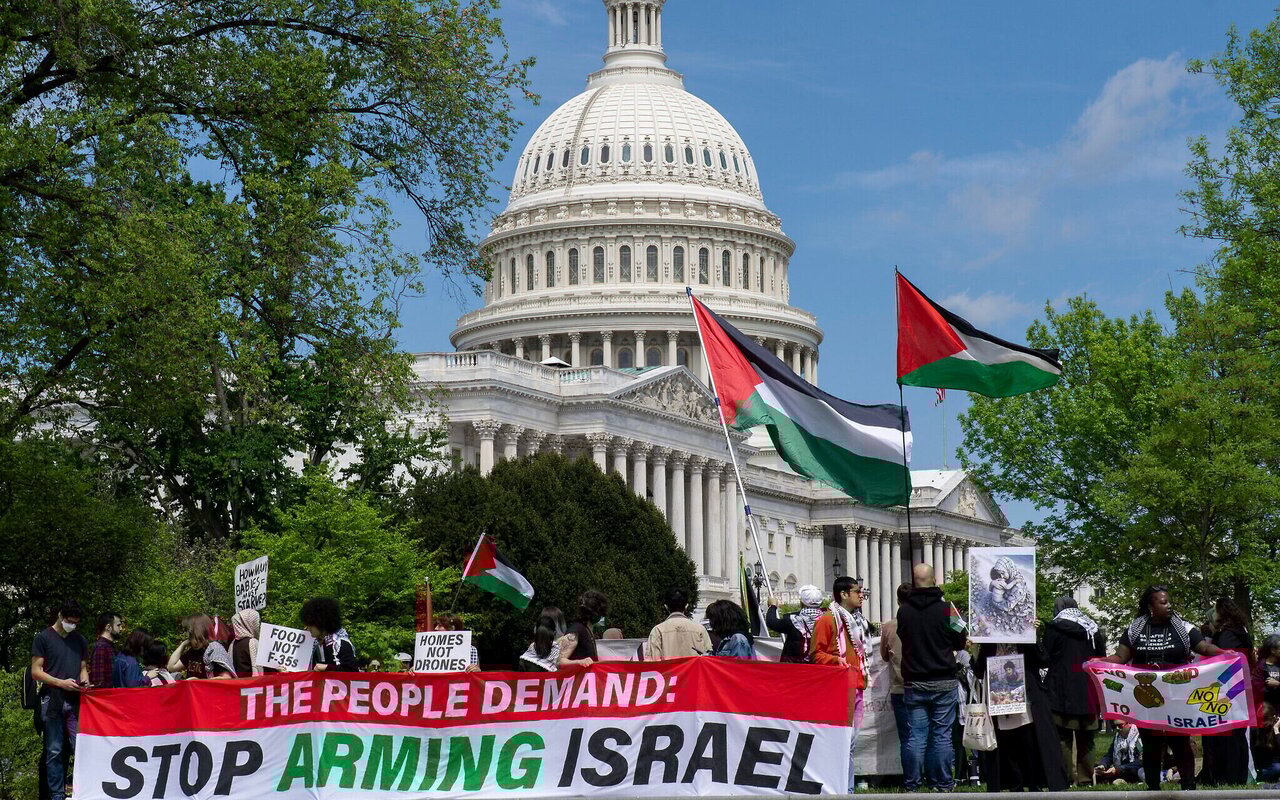
This change is reflected not only in research but also in public activities. Protests have erupted across the United States against the US government’s continued support for Israel, with demonstrations taking place in major cities and on university campuses calling for an end to military aid and a ceasefire in the Gaza Strip. The cease-fire agreement that took effect last month after two years of brutal Israeli war in Gaza has been repeatedly violated by the regime. These demonstrations highlight the widening gap between public opinion and political support, creating a social context in which Israel’s influence campaigns play out.
Despite this change in public sentiment, Israel continues to enjoy strong political support from the United States. Congress and key policymakers maintain strong support, reflecting a persistent gap between public opinion and political alignment. Haaretz highlights how Israel’s US-focused campaign is designed to address this disparity, using sophisticated strategies to maintain influence among voters who have historically supported it.
US influence operations
Mr. Haaretz details Israel’s large-scale public diplomacy initiative based in the United States. Through intermediaries such as Havas Media, the government has funneled millions of dollars into hiring companies associated with Republican and evangelical networks. The campaign includes the production of thousands of pieces of digital content each month, influencer engagement, and targeted outreach designed to shape the opinions of millions of Americans. These campaigns represent a calculated response to declining support and mark a new phase of technological sophistication in Israel’s international communications strategy.
Target the evangelical community
Israel’s efforts are particularly focused on evangelical Christians, whose historically strong support is waning. The proposed campaign described in Haaretz’s filing includes strategies such as church-targeted messaging, digital campaigns, and outreach to Christian students, aimed at countering declining approval ratings and reinforcing pro-Israel rhetoric. Although some of these measures were never implemented, the plans themselves demonstrate a high level of strategic consideration by Israel toward American religious supporters.
Digital influence and AI
The report also highlights Israel’s interest in influencing online discourse. Deals like the one with Clock Tower X included plans to shape the conversation not just on social media and search engines, but also within AI-driven platforms. This represents a shift from traditional “search engine optimization” to actively framing discussions around AI chatbots, and shows that Israel is aware of new technological means for public diplomacy.
Influencer and media engagement
Israel is also investing in influencer campaigns, bringing American celebrities to Israel to produce content that supports Israeli points of view. Projects like “The Esther Project” involve recruiting social media personalities to post regularly on platforms like TikTok, Instagram, YouTube, and X. These campaigns demonstrate a multi-layered approach that combines traditional media, celebrity influence, and digital targeting to maintain U.S. support.
Haaretz’s reporting highlights the tension between declining support for Israel among the American public and an extensive and well-funded campaign designed to maintain its influence. Israel continues to rely on high-level strategic efforts across digital media, influencers, and AI to shape perceptions abroad, even as historically loyal voters grow increasingly skeptical and public demonstrations reflect widespread opposition. This campaign reveals the limits of traditional diplomatic appeals in the face of changing public opinion and represents a deliberate and technologically advanced attempt to manage Israel’s image in the United States.