
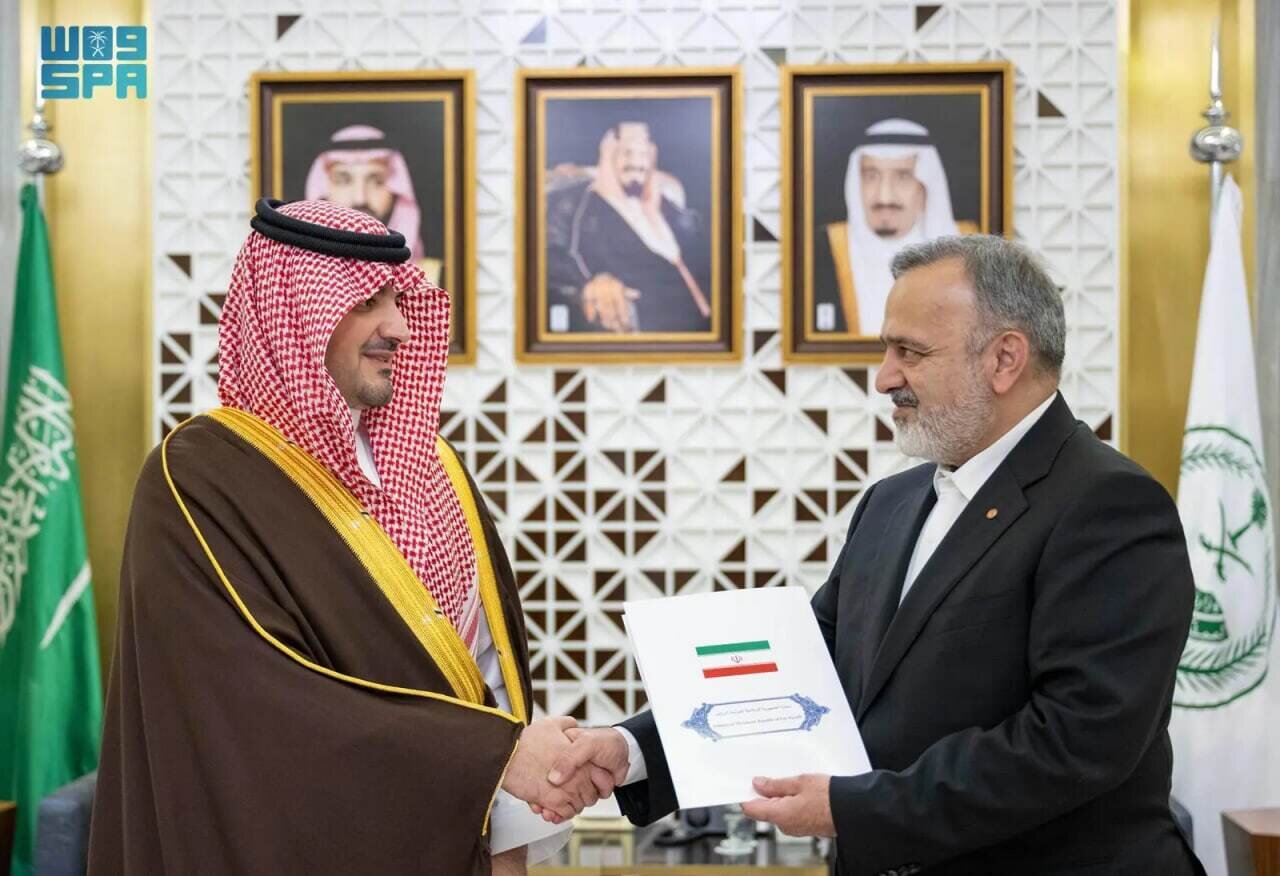
TEHRAN – Ambassador of the Islamic Republic of Iran to Riyadh Alireza Enayati provided details about a letter sent by Iranian President Massoud Pezeshkian to Saudi Arabia’s Crown Prince Mohammed bin Salman.
Enayati said President Pezeshikian sent a message about the hajj to the crown prince after Bayat was appointed head of Iran’s Hajj Pilgrimage Organization last year. The message was delivered to the Saudi Minister of Hajj in the presence of the ambassador.
Enayati added that this year, the president once again sent a message expressing gratitude for the facilities provided to Hajj pilgrims, especially Saudi support for the relocation of Iranian pilgrims under special circumstances due to the Israeli attack in June. This message was conveyed by Mr. Rashidian, the new head of the Hajj Pilgrimage Organization, to Prince Abdulaziz bin Saud, Saudi Minister of Interior and Chairman of the Supreme Hajj Council, in the presence of the Ambassador.
The Iranian diplomat noted that the message emphasized expanding ties between Iran and Saudi Arabia and praised Saudi services and arrangements for Iranian pilgrims. He also confirmed that during his visit, Rashidian signed an agreement with Saudi Arabia’s Hajj Minister regarding next year’s Hajj in Jeddah.
Reuters reported on November 20 that Iran had sent a letter to the Saudi crown prince asking Saudi Arabia to urge the US to restart stalled nuclear negotiations, citing concerns about a possible repeat of Israeli airstrikes and economic challenges. Iranian officials said the letter referred to by Reuters was the same Hajj-related correspondence described by the Iranian envoy.
Iranian officials have frequently criticized Reuters for publishing reports that contradict the Islamic Republic’s official position. In several high-profile cases, the Iranian government has accused the agency of spreading lies, publishing fake news and participating in a soft war against the West.
A notable example is Reuters’ reporting on the 2019 Iranian unrest, in which the outlet cited anonymous sources claiming 1,500 people were killed. Iranian authorities strongly rejected the figures, saying the death toll was much lower and calling the report exaggerated propaganda. Alireza Zarifian Yeganeh, an official at Iran’s Supreme National Security Council (SNSC) and head of the SNSC’s Information and Communications Secretariat, said the claims are part of an anti-Iranian disinformation campaign.
Last year, Reuters suggested that the Islamic Revolutionary Guards Corps (IRGC)’s Quds commander, General Esmail Qaani, was killed or wounded during an Israeli attack on Lebanon. The commander later explained that the purpose of these reports was to have friends and family contact the person so that Israel could gather information about their whereabouts.