
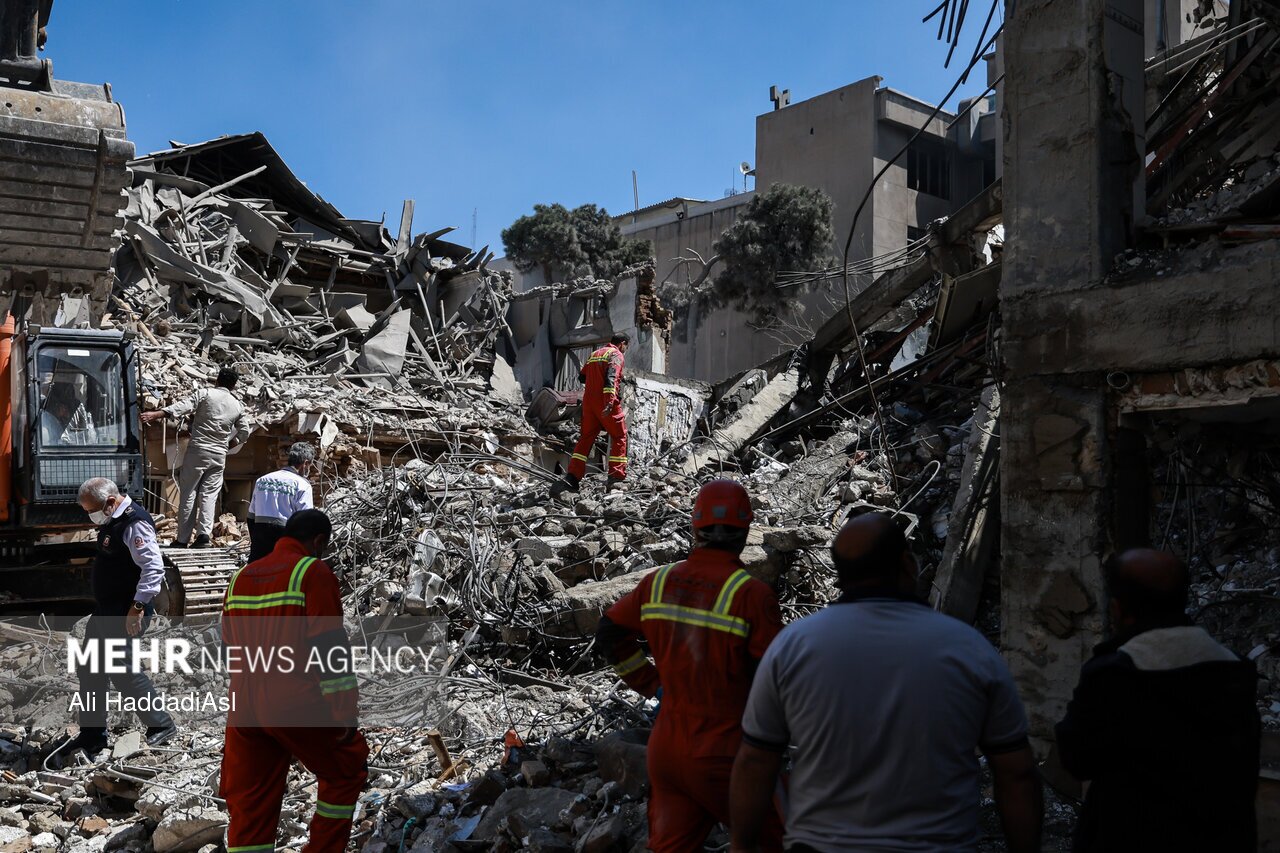
TEHRAN – Israel and the United States continued their aggressive offensive against Iran on Tuesday, as the number of civilian deaths from ongoing attacks steadily rose.
Several explosions were reported in Iran’s capital Tehran after an overnight strike that killed at least 15 people across the country. The Israeli military claimed responsibility for the attack on an Iranian petrochemical compound in Shiraz.
Meanwhile, the governor of Mashhad province in northeastern Iran ordered the immediate suspension of all train services departing from the city’s central station. The suspension of all scheduled trains is a precautionary measure and will remain in place “until further notice,” Mehr News Agency said.
Mehr news agency also reported that Israeli military attacks hit the Yahya Abad railway bridge in the center of Kashan city. The agency quoted Esfahan’s deputy governor as saying that two people were killed in the airstrike. The attack came after the Israeli military issued a warning to Iranians not to use trains.
In Alborz province, Iranian state media reported that US and Israeli airstrikes on residential areas killed 18 people, including two children. The deputy governor of Alborz confirmed the deaths, adding that 24 others were injured.
The human cost of the invasion is also reflected in Iran’s education sector. Education Minister Alireza Kazemi reported in a television interview that 310 students and teachers were killed and more than 210 injured. More than 750 schools have been damaged since the US-Israeli coalition began its war against Iran at the end of February. The invasion has claimed more than 2,000 lives so far.
The ongoing war has also caused widespread destruction to Iran’s cultural heritage, scientific institutions, and research centers. Although the United States and Israel claim they are targeting military facilities, Iranian government data tells a different story. At least 56 archaeological sites, 30 universities, and 55 libraries were damaged.
On February 28, the United States and Israel launched a military operation against Iran, starting with the assassination of Islamic revolutionary leader Seyyed Ali Khamenei and the supreme commander of the armed forces, with the aim of dismantling Iran’s political and military leadership. However, Iran’s continued retaliatory attacks on Israeli and US military bases in the Persian Gulf, coupled with growing pro-government protests across the country, indicate that the plan drawn up by Tel Aviv and Washington has failed.
Despite continued aggression, Iran remains steadfast in defending its sovereignty, people, and cultural heritage, and remains resilient against foreign aggression.