
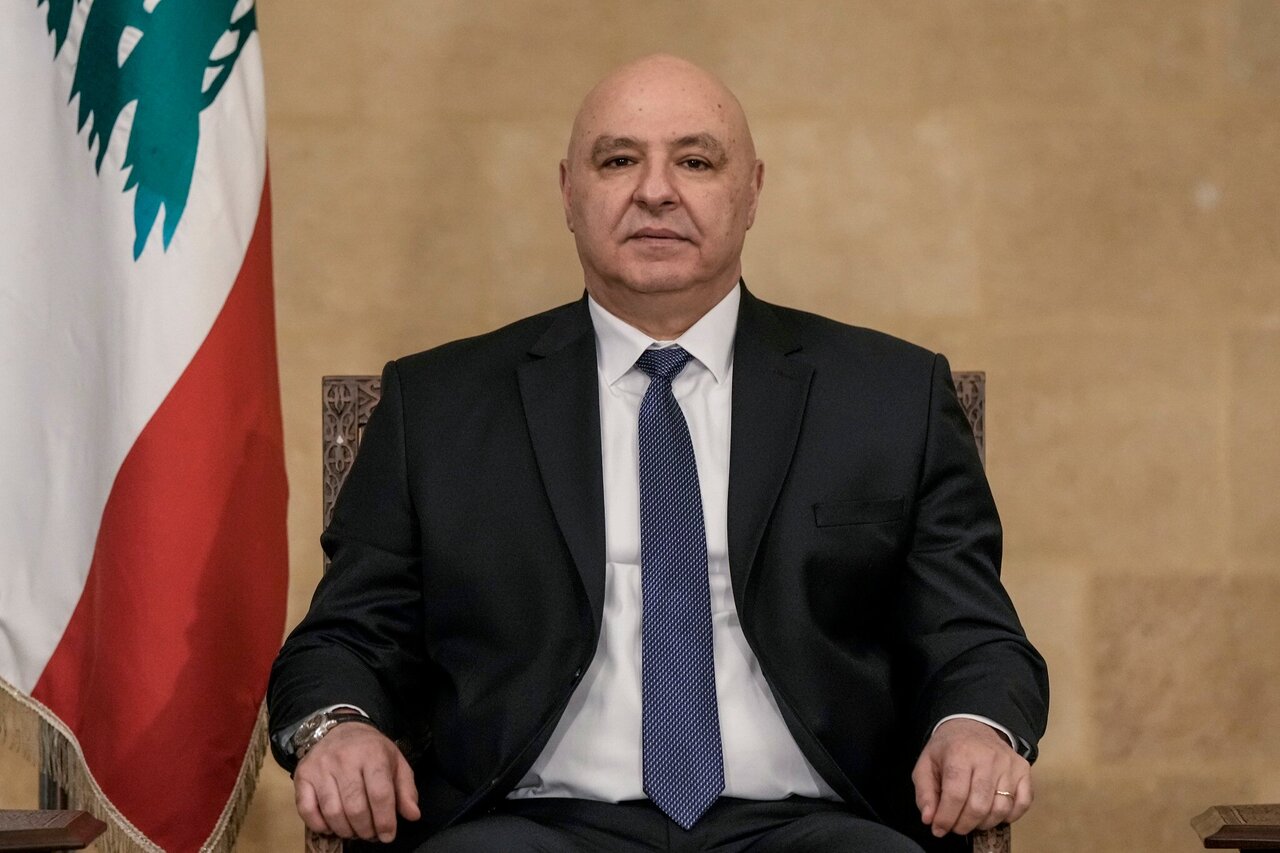
BEIRUT — Recent talk about “negotiation options” announced by President Joseph Aoun has reignited one of Lebanon’s most dangerous debates: normalization disguised as realism.
His comments came just as Israel’s enemy escalated its rhetoric to the highest level since 2006, with US special envoy Tom Barrack publicly warning that refusing to negotiate could “lead to civil war or a devastating Israeli attack.”
In this tense situation, Aoun’s call to “pick up the phone and negotiate with Israel’s enemies to end the farce” sounded more like obsessive obedience than statesmanship.
What the president and his aides present as “realism” is actually an abandonment of the deterrence equation that has protected Lebanon for nearly two decades.
By putting the resistance and Israel’s enemies on equal footing (both sides are said to be “exhausted” and “ready for compromise”), Aoun dangerously undermines the very balance that has prevented war from starting.
His rhetoric reflects Western narratives that portray resistance as a burden rather than a shield.
Reports confirmed that the US government immediately reprimanded Aoun after he called on the military to “stand against Israeli aggression.”
The Americans made their position clear that the Lebanese army must not engage Israel’s enemies. In their eyes, the mission is to contain Hezbollah.
This exposes the actual hierarchy of US priorities. The disarmament of resistance groups, the pacification of borders, and the security of Israel’s northern front are all under the illusion of “international obligations.”
At the same time, diplomatic efforts are intensifying in Beirut, led by American and Egyptian envoys including Mr. Barrack and General Hassan Rashad.
Their proposal for “direct negotiations with international support” excludes one key condition: a ceasefire. Intense negotiations are not diplomacy. they are forced.
The aim is to force Lebanon into a dialogue of surrender rather than sovereignty.
Meanwhile, the Israeli press has helped create the pretext for escalation. Media outlets such as Marib and Khan emphasize Hezbollah’s “revitalization” and “rebuilding of Radwan’s forces,” suggesting that Israel is being provoked to take precautions.
This rhetoric is tailored to Washington’s political message and serves as psychological warfare to justify limited attacks, perpetuate public fear, and pressure Beirut into compliance.
Washington’s script and Lebanon’s leadership crisis
Behind this orchestrated drama lies a broader US-Israeli ploy to redraw the post-Gaza regional map by neutralizing Lebanese resistance.
Militarily exhausted, Israel is seeking a symbolic political victory in Lebanon. Washington hopes to translate this victory into regional “stability” by integrating Lebanon into a security framework that benefits Tel Aviv.
When Mr. Barrack claims that “disarmament of Hezbollah is a precondition for peace,” he is simply repeating the Israeli regime’s arguments in American terms.
President Aoun, on the other hand, appears to be motivated by personal and political gain. By floating the concept of negotiations, he is seeking to secure a legacy of “statesmanship” at the end of his term, even if it means undermining Lebanon’s last means of deterrence.
However, this opportunism isolated Aoun from his allies in the Free Patriotic Movement and deepened his distrust with resistance forces who saw his comments as a betrayal of national principles.
Chairman Navi Berri sought to moderate the debate and called for “an end to attacks before talks can begin.” But even his cautious tone reveals the predicament Lebanon finds itself in: between the hammer of U.S. sanctions and the anvil of Israeli threats.
Although Prime Minister Nawaf Salam presents himself as a “balanced arbiter,” his government lacks both the political power and economic stability to withstand intense foreign pressure related to “terms reform” and financial aid.
An even deeper tragedy is that Lebanon’s leaders appear to have become psychologically dependent on Western legitimacy.
Instead of strengthening domestic unity, it seeks legitimacy from the very powers that enable Israel’s aggression. The so-called “negotiation track” is not a sovereign initiative. Rather, it is a managed path to forced normalization.
Israel has never been swayed by diplomatic overtures or UN resolutions. It only understands the language of resistance and deterrence through strength and fortitude. As Israeli military aircraft continue to violate Lebanese airspace every day, it is becoming increasingly clear that peace negotiations cannot be negotiated from a position of submission.
For Lebanon, the real illusion lies not in diplomatic promises but in believing that the same forces that undermine its sovereignty can guarantee peace in Lebanon. Negotiations without power are not peace, but capitulation scripted by foreign capital.