
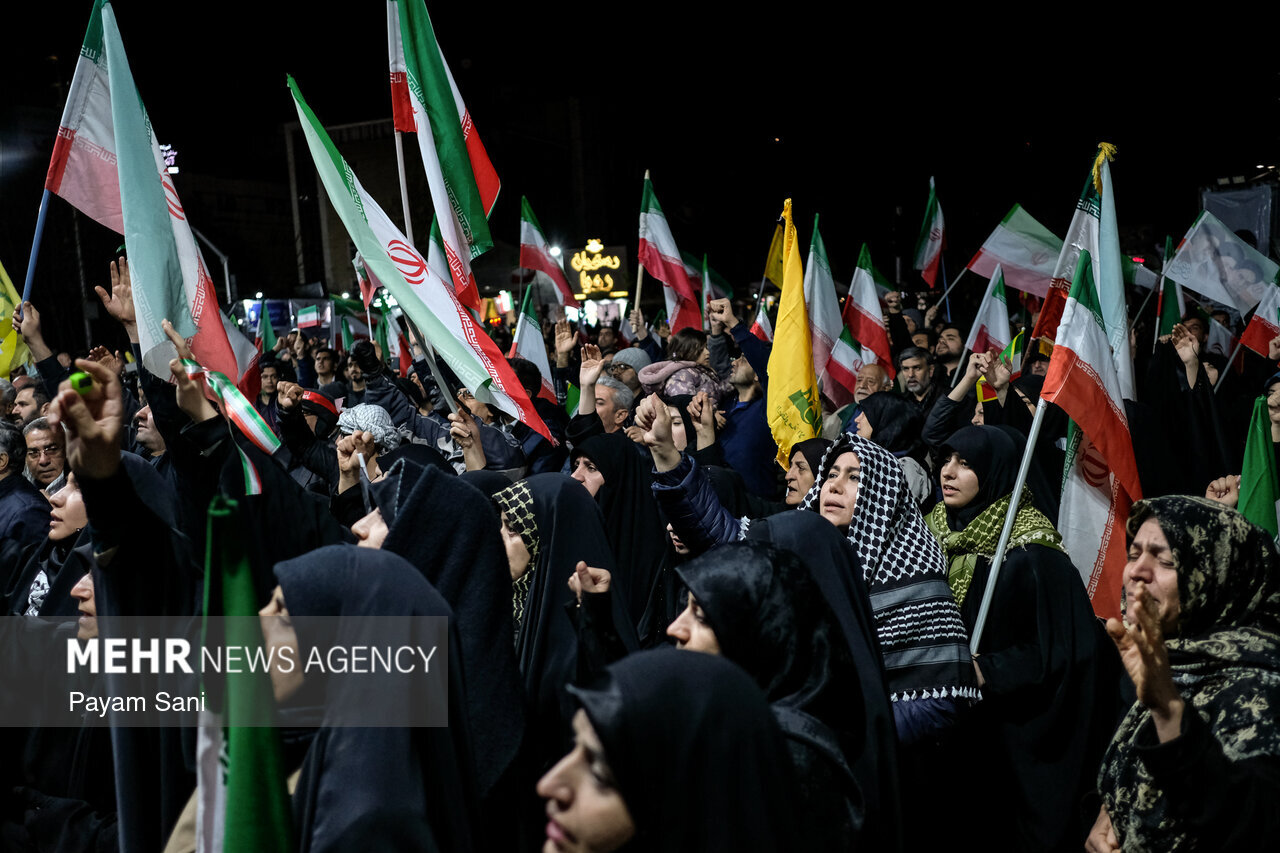
Politicians with insight across multiple fields, from politics and governance to the military and the foundations of civilization, are truly rare. Imam Khamenei, our country’s martyred leader, was one of them. A wise thinker who went beyond the superficial structure of society and deeply considered the roots and foundations of civilization. Perhaps one of the clearest reflections of this is his high view of women, their dignity, status, and rights.
When considering major social and political changes, one of the most important indicators is the extent and quality of women’s participation in those movements. Iran’s Islamic Revolution is no exception. While many official narratives tend to focus on male figures and visible political action, a deeper look reveals that women were not on the periphery but at the very center of this historical transformation. Their presence was more than just support. Often it was a driving force, stable and even decisive.
By highlighting role models such as Lady Fatima (peace be upon her), she sought to demonstrate that Muslim women can fulfill their responsibilities within the family while also playing an active role in the broader social arena. This perspective, in many ways, formed the theoretical basis for women’s participation in the Islamic revolution.
Women: A powerful hidden network of revolution
Before the revolution, Iranian women played an important role in spreading ideas, organizing forces, and laying the foundations for sustaining movements. Women played an important role in amplifying the revolutionary discourse by leveraging their social positions within their families and communities.
The home, as the main center of communication, was often managed by women. Religious gatherings, community circles, and cultural gatherings became spaces for articulating revolutionary ideas, and women played a central role in maintaining and expanding these spaces. Although this role is not well represented in official accounts, it was in fact one of the key factors in the success of the revolution.
Khamenei reiterated this point, calling the presence of women in the formation and victory of the revolution “real and decisive.”
Elsewhere he says:
“In the past, women who served on the revolutionary front played a prominent and important role both in the period leading up to the revolution’s victory, in its early years, and during the imposed wars. They had a visible and influential presence. We cannot allow this visible presence of women active on the revolutionary front to fade. No. Those who oppose the revolution are trying to use talented women for their own purposes. There are far more capable, active, articulate and knowledgeable women who think, write, and lead. They must not be left out of the field defending the revolution.
Women’s participation in the revolution was not limited to the cultural and social sphere. Many existed in more difficult and dangerous fields, such as enduring imprisonment and torture, or engaging in security-related or even military activities. This reflects the significant change in women’s role from “supporting” to “guiding.”
Among these figures, figures like Marji Hadić Daba stand as clear examples of this transformation. She not only took an active part in underground revolutionary activities, but also played a role in the military and business fields. Her command of the Hamadan Revolutionary Guards and her responsibilities in the post-revolutionary structure reflect confidence in women’s crisis management abilities.
Martyred leader Imam Sayyid Ali Khamenei said of her:
“This woman is one of the people who can represent the true direction of women in Islamic society, not only in our Islamic Republic, but also in terms of Islam, its logic and culture.”
The importance of such figures lies in the fact that they should not be seen as exceptions, but rather as representative of the broader capabilities of revolutionary women, women who played diverse and complex roles under difficult circumstances and contributed significantly to advancing the goals of the revolution.
Women’s role did not end with the victory of the revolution. Rather, we have entered a new phase. At this stage, women played an important role in consolidating and institutionalizing the achievements of the revolution. Their presence in cultural, educational, social, and even political institutions shows that they continue to participate actively.
During the eight-year forced war with Iran, women played active and effective roles both on the front lines and in the rear, working as journalists, doctors, nurses, and supporting the war effort in a variety of ways behind the lines.
Examples such as the presence of women in Islamic advisory councils, cultural activities in schools and universities, and participation in social institutions all demonstrate that women were an integral part of the construction of the new system.
Figures like Mrs. Dabbar, who moved from revolutionary struggle to leadership and legislative roles, symbolize this continuity, showing that women were not only present at the moment of revolution, but also in the process of nation-building and nation-building.
In more recent developments, such as short-term imposed conflicts and recent hostilities attributed to America and Israel’s adversaries, women are again showing an active and revolutionary presence. They continue to play a vital role, from working in sensitive professions such as medicine and the media to participating in mosques and support networks, as they did during the eight years of war.
This conflict also includes other stories that are distinctly female. It is the visible presence of women who are actively standing in public spaces and fields in defense of their homeland.
After all, an examination of the role of women in Iran’s Islamic Revolution shows that their contribution was not marginal, but fundamental and decisive. Women were present across multiple spheres, from family and society to struggle and governance, and played an important role in both the victory and consolidation of revolutions.
Khamenei’s views provide a theoretical framework for understanding this role, with an emphasis on dignity, identity, and women’s capabilities. Within this framework, women are not just active participants in society, but one of the important pillars in the formation of Islamic society and civilization.
From before the revolution to the present day, Muslim women in Iran have not been on the fringes of history, but have been at the center of major changes and played an important role in shaping the future of their society.