
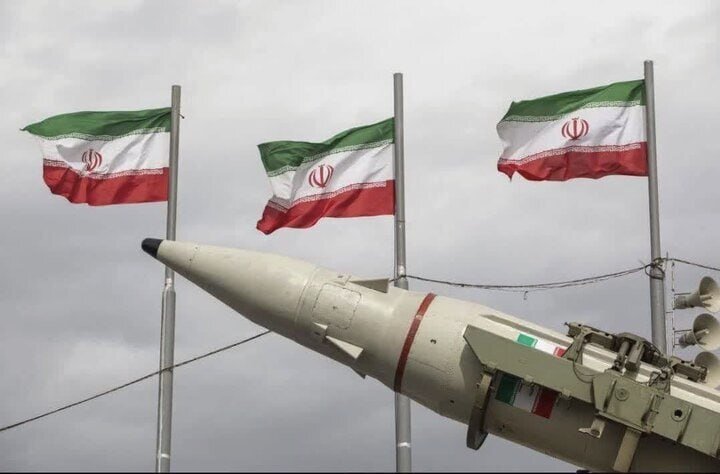
TEHRAN – Iranians woke up Wednesday morning to the good news that a two-week ceasefire had been reached between Iran and the United States, brokered by neighboring Pakistan.
Both sides agreed to a ceasefire at 11:00, when most Iranians were asleep. However, some people stayed up late at night to see what the outcome of the mediation talks would be.
During the two-week ceasefire, during which Iran will also open the vital Strait of Hormuz, Iranian and US delegations are scheduled to discuss Iran’s “10-point peace plan”, which the US says is a “viable basis for negotiations”.
Iran’s strong rejection of several aspects of the US’s original 15-point proposal, and the eventual agreement of Iran’s plan as the linchpin of the talks, signifies a victory for the Islamic Republic.
Iran’s 10-point plan includes important issues that, if both sides fully agree to during the talks and Israel does not undermine the talks by breaking the cease-fire agreement, will most likely end nearly 50 years of tensions between Iran and the United States, which began to escalate over the past two decades.
The most important aspects of this plan are to recognize Iran’s legitimate right to nuclear enrichment, end sanctions on the country by repealing all UN sanctions resolutions, and guarantee non-aggression.
Through 40 days of heroic resistance against relentless and heavy air attacks by the United States and Israel, Iran succeeded in getting the United States to consider its proposal. The invaders used a bomb against Iran that was unprecedented in human history. They used various types of fighter aircraft, including the world’s most sophisticated F-35 fighter. The United States also used B-2s, B-1s, B-52s, A-10s, other advanced fighter aircraft, bunker busters, and 5,000-pound bombs. The United States dropped $5.6 billion worth of bombs on Iran in the first two days of the war alone.
As a country that has been attacked suddenly and illegally, Iran has strongly and appropriately responded to all kinds of attacks by the aggressor using various types of advanced precision-guided missiles and unmanned aerial vehicles.
Iran’s resistance and response to the United States as the world’s largest superpower and Israel as a regional power has elevated it to the ranks of the world’s most powerful countries.
Iran has shown great resilience despite losing senior political, military and intelligence officials to assassinations by Israel and the United States. Even Iranian opposition figures, some of whom are currently or have been imprisoned, as well as Iranian opposition figures abroad, have written articles, issued messages, and composed poems strongly supporting resistance against the invaders.
“The war is turning Iran into a major world power,” Robert A. Pape, a professor at the University of Chicago, wrote in the New York Times on April 6. This is not through traditional parity, but through control of 20 percent of the world’s oil flows and an asymmetric toolkit whose staying power makes it unstoppable.
After the ceasefire was declared, Professor Pape also wrote that X was “a major strategic defeat for the United States, its biggest loss since Vietnam. It signals Iran’s rise as the center of an emerging Fourth World power.”
“This ceasefire is a glorious political victory for Iran, one that will not only be recorded in history but also open up hopeful and confident prospects for the future,” pro-reform political activist Ahmad Zeidabadi wrote on his Telegram channel.
Fellow former reformist lawmaker Hossein Marashi said the war made Americans realize they were facing a “strong Iran.”
“Iran demonstrated its defense capabilities, responding to enemy attacks and countering US military bases in neighboring countries. Its effective presence in the Strait of Hormuz proved that the world should react to US aggression,” Marashi told ISNA.
He also praised the people’s resistance, adding: “We should kiss the hands of the military.”
We will have to wait and see what ultimately emerges from the upcoming negotiations in Islamabad, but Iran certainly will not and must never compromise on certain key points, including ending illegal and crippling sanctions against its people.
Iranians have not been punished for any crimes. They have been subject to war crimes and crimes against humanity in the current war, which is currently suspended, and the 12-day war in June 2025. The attack on a primary school in Minab on February 28, the first day of the war, the sinking of an unarmed warship in the Indian Ocean with 170 military personnel on board, and the attacks on residential buildings are clear examples of war crimes and crimes against humanity.
Iranian citizens are exposed to economic terrorism and suffer from shortages or scarcity of certain medicines available on other countries’ markets. For example, some children suffered from sphenodermatosis due to economic and financial sanctions.
Iran must never back down from advocating for the lifting of unjust sanctions, which means the US is also introducing restrictions on foreign nationals planning to visit Iran as tourists.
The Trump administration has done everything in its first and second administrations to strangle Iran economically.
Economic experts offer startling numbers about the cost of primary and secondary sanctions against Iran. The numbers vary from about $1.5 trillion to about $3 trillion.
Iran has been punished for its nuclear program, which has been under intense scrutiny by the United Nations’ International Atomic Energy Agency (IAEA). Iran just suspended cooperation with the IAEA after Israeli Prime Minister Benjamin Netanyahu, with support from the Trump administration, attacked Iran’s nuclear facilities in June 2025. Once again, Iran authorized the IAEA to inspect nuclear-related activities outside of the facilities attacked by Israel and the United States.
In its 10-point ceasefire plan, Iran reiterated its commitment to not producing nuclear weapons.
The only people who continued to claim that Iran was seeking to build nuclear weapons were Israeli extremists like Prime Minister Netanyahu and American Christian-Zionist fanatics, and unfortunately President Donald Trump parroted their claims. And they finally pushed him into a full-scale war with Iran.
If Iran truly sought to produce nuclear weapons, it would not have accepted intensive inspections by the IAEA and would not have held the two years of intensive talks that led to the 2015 nuclear agreement (JCPOA), which was unexpectedly abandoned during President Trump’s first term.
The lesson from this senseless and illegal war is that resistance brings hope, victory and, hopefully, a lasting agreement.