
TEHRAN – Zionist Prime Minister Benjamin Netanyahu says the Israeli regime supports a ceasefire between Iran and the United States, but it does not include Lebanon.
His statements contradict statements from Iran and mediator Pakistan. They insisted that the ceasefire includes an end to the regime’s aggression against its allies in Lebanon and Iran.
Zionist officials on Wednesday attacked 100 targets in Lebanon as the regime’s indiscriminate invasion continues, claiming it had previously vowed to seize all Lebanese territory south of the Litani River.
Meanwhile, Hezbollah issued the following statement to the Lebanese people: “Today we stand on the threshold of a great historic victory, which will be achieved thanks to the sacrifices of our combatants, the blood of our martyrs, and your unparalleled perseverance and perseverance.”
It added: “A conspiratorial and brutal enemy may resort to deceptive practices in an attempt to escape from the image of defeat and to fabricate the illusion of gains not achieved on the battlefield.”
Also on Wednesday, regime forces issued a new evacuation order for residents of southern Lebanon. These orders increasingly resemble the regime’s genocidal war on Gaza.
Comparing Lebanon and Gaza in favor of Lebanon and considering the military superiority of the Israeli regime in both situations, it is difficult to imagine how this force could overcome the differences when applying repeated plans in different contexts.
The Israeli Occupation Forces’ (IOF) operations in the ongoing invasion in southern Lebanon combine three military doctrines, followed by a rapid movement strategy with heavy incursions south of the Litani River.
Maneuver warfare: This aims to disrupt Hezbollah’s military power by using rapid movement as an alternative to the doctrine of decisive strike. It differs from tactics of gradual destruction and relies on rapid, multipronged advances that seek out and attack weaknesses while avoiding direct confrontation.
This involves tactical withdrawals and relocations that do not require permanent occupation, especially in towns in the deep south, except in some areas that the regime has occupied since the 2024 ceasefire, but can be controlled by strategic depth that protects the continued movement of the occupying regime’s paratroopers, who are unable to dig trenches or install infrastructure, even temporarily.
IOF had previously applied this model during the invasion phase of the Gaza Strip, particularly during the conquest of northern Gaza City after Eyal Zamer took over as chief of staff following the resignation of Helj Halevi. This same combat doctrine now appears to be being adopted in southern Lebanon, albeit with relative differences.
Dynamic maneuver-based deployment
This includes positioning at key intersections to prevent Hezbollah from organizing according to a field plan appropriate to the region’s geography. It requires near-fixed positioning but can be rapidly redeployed along relatively protected flow lines. IOF followed such a fighting pattern in Gaza before implementing the current ceasefire.
war of attrition
This is aimed at gradually exhausting the Lebanese resistance by inflicting continuous losses over time, even if there is no quick solution. This is evident, for example, in the fighting on the outskirts of Kiam. IOF followed this approach in Gaza after Eyal Zamer became chief of staff, and is now applying the same plan to attacks south of the Litani River, although the tactical details differ somewhat.
IOF combined these military doctrines in Gaza and is now repeating them in attacks south of the Litani River, but with relatively different tactical nuances. They recognize that Hezbollah in southern Lebanon, like Hamas and Islamic Jihad in Gaza, is an unconventional force that does not rely on permanence.
But although the regime’s military planners may recognize these differences and attempt to close the gaps, these plans overlook important differences that could change the outcome. Still, these strategies were not entirely successful in Gaza, and are unlikely to achieve the same results, although they have allowed the IOF to penetrate deep into Gaza City under continuous shelling.
One plan in two different realities
The IOF is forced to adopt this plan as it attempts to advance or expand south of Litani using a combination of rapid maneuvers and dynamic deployments, while seeking to exhaust Hezbollah through combat force coordination. This forced approach is caused by the following factors:
Nature of military vehicles of the regime
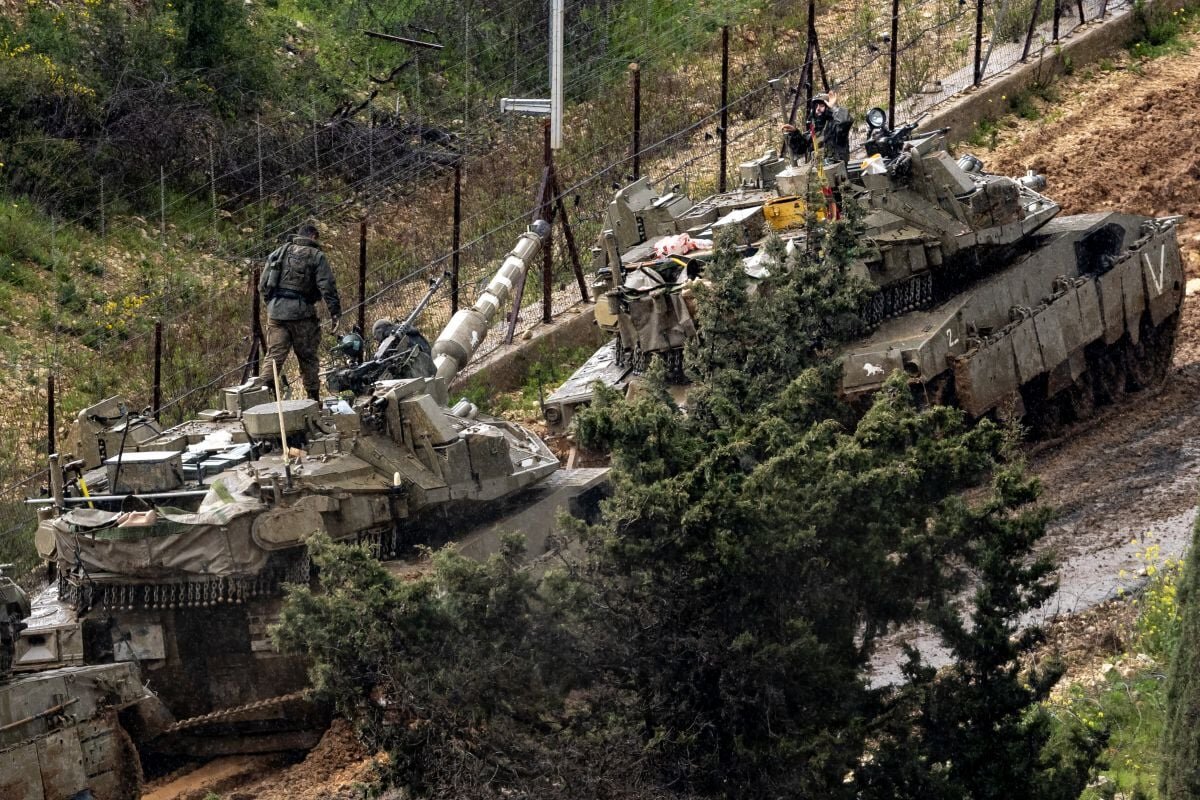
This attack relies heavily on Merkava tanks, Eitan armored vehicles, D9 and D10 bulldozers, and lacks the ability to bring in equipment suitable for permanent residence in trenches and camps. Other military vehicles, such as excavation and construction vehicles and troop carriers, are vulnerable to Hezbollah attacks. The targeting of Merkava tanks, with approximately 150 destroyed or damaged each day, illustrates the risks associated with unarmored vehicles.
political uncertainty
This is acknowledged by Eyal Zamer, who has raised several red flags with the political leadership and warned of the implosion of the IOF.
reluctant to conscript more troops
To hold a position in southern Lebanon, two more divisions are needed to secure the position. 400,000 reservists were called up, but the response was minimal, and exact numbers have not been disclosed.
This is no longer a problem related to the Haredi community’s refusal to enlist, but rather widespread apathy due to lack of motivation, escalation of the war, and increased risk of confronting Hezbollah on its home turf. The situation has worsened as reservists continue to be mobilized for the third year in a row, with many losing their civilian jobs. The financial system within the IOF does not provide reservists with the same compensation as regular soldiers.
Underestimating Hezbollah’s capabilities
The Zionist regime’s initial calculations were based on the erroneous assumption that Hezbollah’s organizational and military infrastructure south of Litani could be quickly destroyed. By the first week of fighting, this assumption was proven wrong, and with each passing day these miscalculations became more apparent.
These factors forced the IOF to integrate various military doctrines, repeating the experience in Gaza while in some cases acknowledging the differences between the two realities while ignoring them. Belief in the strength of the Israeli regime persists due to several factors.
• Huge military advantage.
• Unprecedented US support.
• In the aftermath of the October 7 attacks.
• Successful security attack against Hezbollah.
• Changes within the Lebanese government regarding the disarmament of Hezbollah.
• Unfavorable developments for Hezbollah in Syria.
・Israel takes control of southern Syria and is allowed to invade sensitive areas of Lebanon.
• US-Israel war against Iran.
Main differences between Gaza and Lebanon
These differences are critical in hindering the success of the Zionist regime’s military strategy, and are likely to become more apparent over time, especially as the regime’s aggression against Iran is emboldened by the Islamic Republic’s successful offensive that crippled the regime for 40 days before a ceasefire. The main differences between Gaza and Lebanon in the regime’s current offensive planning framework are:
** Geography and siege of Gaza. Gaza is a flat, exposed, and confined area compared to southern Lebanon, which has a more complex geography, and Lebanese territory is relatively stable. While Gaza is under forced siege, Lebanon, although under siege, is not in the same situation, particularly as its ties to Iran increase Hezbollah’s mobility despite its geographical distance.
** Resistance ability. Palestinian resistance is much weaker than Hezbollah, which has developed its capabilities in a relatively open environment, but resistance in Gaza is limited by the ongoing war.
Given the differences between Lebanon and Gaza, it is difficult to imagine how an occupying regime could overcome these challenges by repeating its strategy in a different context.
Even if the strategy is adaptable or capable of escalation as the battlefield changes, the terrain and support from the sacrificial population may be sufficient to defeat overwhelming military power, no matter how explosive.